
Article: Kundan vs Polki vs American Diamond: Which to Buy?

Kundan vs Polki vs American Diamond: Which to Buy?
If you are weighing Kundan against Polki against American Diamond, here is the short version: Polki is the heirloom you buy once and hand down, Kundan is the warm, traditional look that anchors most South Asian bridal sets, and American Diamond is the crisp, high-sparkle choice that stretches a budget the furthest. None of them is simply better than the others. They answer three different questions, and the right one depends on what you actually need the jewelry to do.
Let me explain what sets them apart, because the names get used loosely and a lot of shoppers end up paying for the wrong thing.
What each one actually is
Polki is uncut, unfaceted natural diamond, set into gold in its raw state. There is no machine cutting and no chemical lab work. That rough surface is why Polki has a soft, almost milky glow instead of a hard sparkle, and why a real Polki set runs into serious money. Yes, it contains real diamonds, just in their raw form rather than cut and polished. It is built on solid gold, it is heavy in the hand, and it genuinely lasts for generations. If you are buying a once-in-a-lifetime piece and treating it as an investment, this is the category you are looking at.
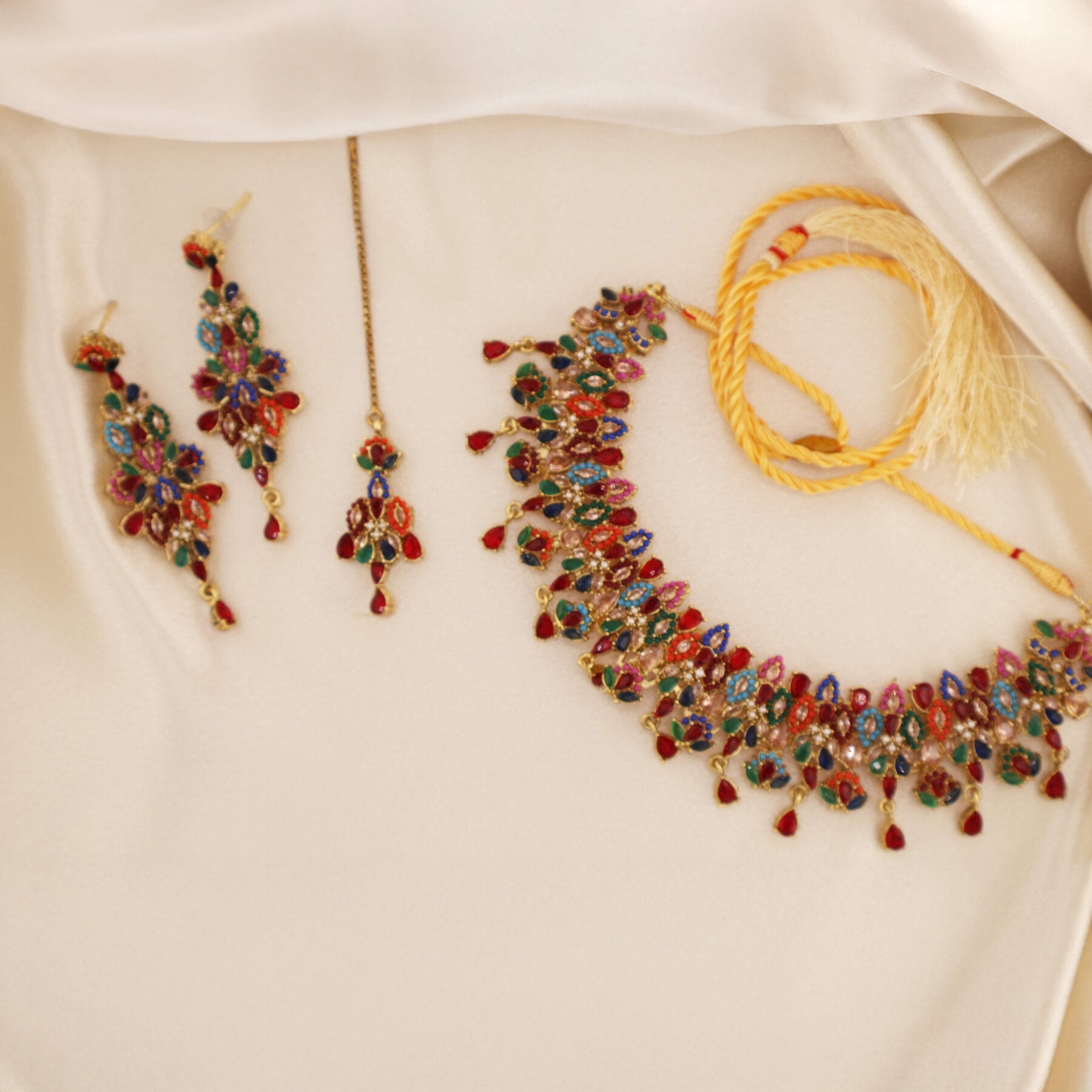
Kundan is older than most people realize, and it is a technique rather than a stone. Refined gold foil is worked around a stone and pressed into a lac (natural resin) base, which is what gives Kundan its bright, glossy, framed look. Traditional Kundan used glass and polished stones, not diamonds, so it is lighter and far more affordable than Polki while still carrying centuries of craft behind it. When you picture a classic Pakistani or North Indian bridal set with that luminous gold border around each stone, you are usually picturing Kundan.

American Diamond is the modern one, and the name causes endless confusion, so here it is plainly: American Diamond is simply what South Asian jewelers call cubic zirconia, the same man-made stone, cut and faceted to throw light exactly the way a diamond does. At arm's length, across a function hall, a well-cut AD stone reads as a diamond. It is precise, it sparkles hard, and because it is manufactured rather than mined, it is the most accessible of the three by a wide margin. This is what makes contemporary white-stone sets, statement earrings, and sharp modern looks possible without a five-figure bill.

So which should you buy?
Start with the occasion, not the price tag. If you are the bride and you want one anchor piece to keep forever, Polki earns its cost, but go in knowing you are paying for gold and natural diamond, and that the look is understated rather than dazzling. For the bridal set most brides actually wear, the full Kundan-style suite hits the sweet spot: it photographs beautifully, it carries the traditional weight the day calls for, and it does not demand a bank loan. Browse our bridal jewelry collection and you will see how much presence a well-made Kundan-style set has on camera.
If you are a guest, a sister of the bride, or you want a second look for the walima or reception, a lighter white-stone or AD-style set is usually the smarter buy. It is light enough to wear all night, the sparkle does the work in photos, and you can own several pieces for the cost of one heavier set. The same logic applies to anyone building a versatile collection rather than a single heirloom.
How to judge quality within each type
For Kundan-style work, look at the gold framing around each stone. The foil edges should be clean and even, the setting should sit flush, and the back should be finished rather than rough. Sloppy framing is the fastest tell of a cheap piece. Our handcrafted full sets are built around that framing detail, because it is what separates a set that looks heritage from one that looks costume.
For American Diamond, the cut and the plating are everything. AAA-grade stones hold their fire and do not cloud, and a thicker plating (around one micron or more) is what keeps the finish from fading after a few wears. Cheap AD goes dull fast. Good AD looks expensive for years.
For Polki, you are largely trusting the gold purity and the diamond certification, so buy from a jeweler who will document both in writing. If they will not, walk away.
A quick word on care, because it changes the value equation
This also settles the question of what lasts longest. Solid-gold Polki endures for generations, no contest. A well-made Kundan-style or AAA-grade American Diamond piece will hold its finish for years, but only if you treat it right. Polki and solid gold forgive a lot. Kundan-style and gold-plated pieces want a little more care: keep them away from perfume and water, wipe them down after wear, and store each piece separately so stones do not scratch. Treated well, a good plated set will look new across an entire wedding season and beyond. If you want a starting point, the Rani set is a good example of the Kundan-style detailing we have been talking about.