
What Is a Full Set in South Asian Bridal Jewelry?
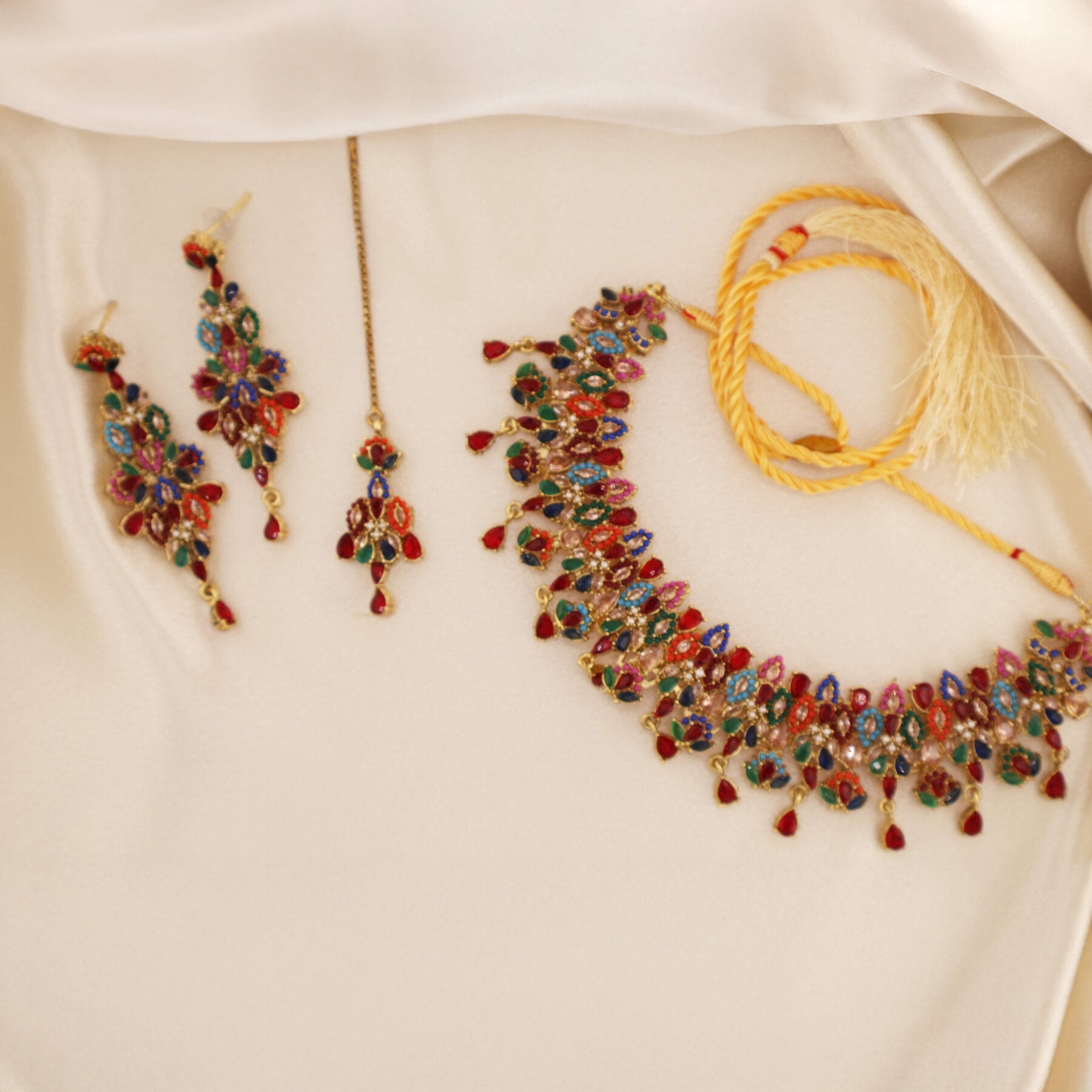
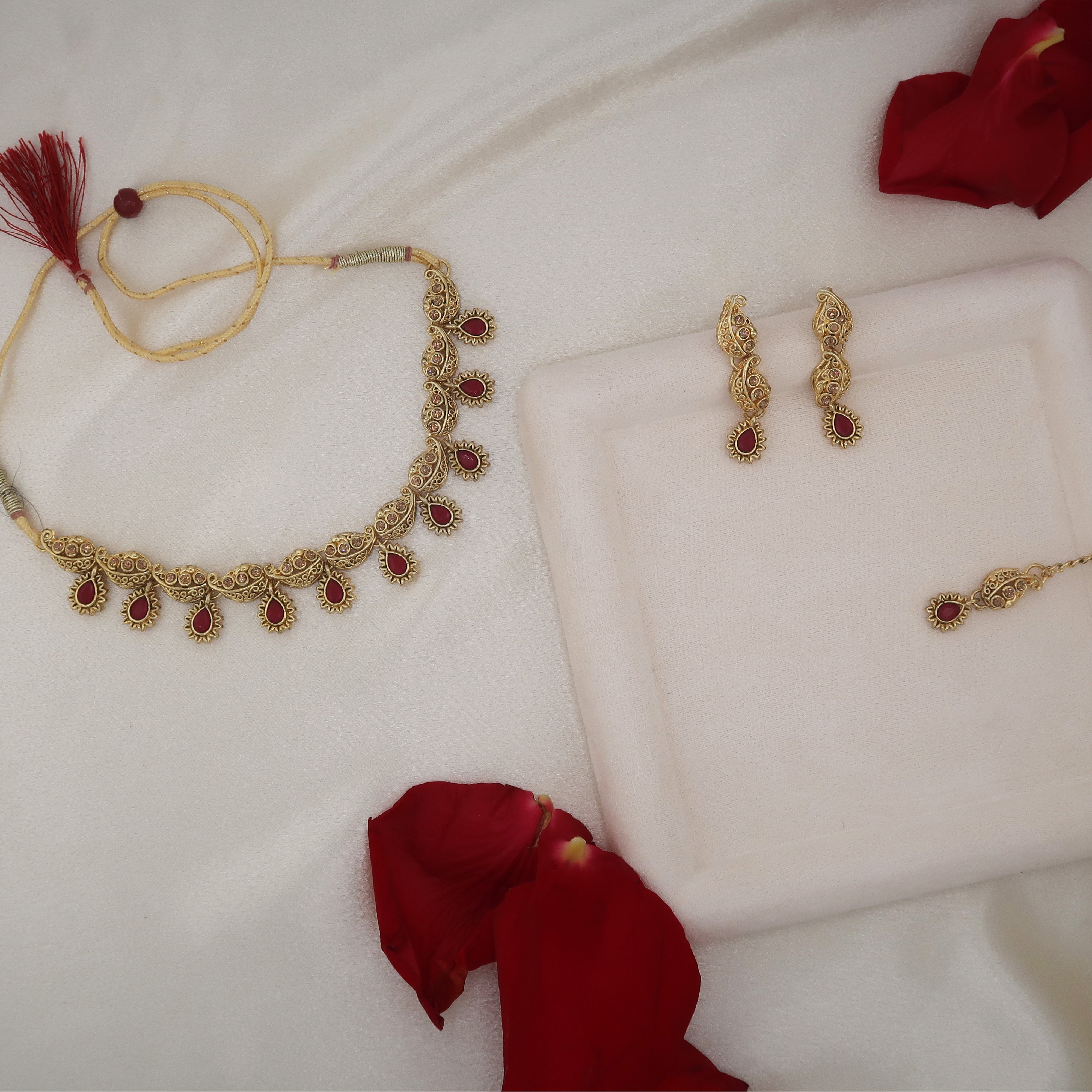
A full set in South Asian jewelry is a matched suite meant to be worn together: at minimum a necklace and a pair of earrings, and almost always a maang tikka for the forehead. The pieces share one design language, the same stones, the same gold tone, the same motifs, so they read as a single deliberate look rather than three separate things that happen to be on at once. That coordination is the entire point of a set.
Walk into any conversation about bridal or festive jewelry and the phrase comes up within a minute. People say it casually, the way you would say "a suit," and they assume everyone knows exactly which pieces are in the box. They do not always agree. So here is what a full set actually means, what it usually includes, and where the edges get blurry.

What a full set usually includes
The core of almost every set is two pieces: the necklace and the earrings. If a listing says "set" and nothing else, that is the safe assumption. The South Asian tradition tends to go one step further and add the maang tikka, the ornament that rests at the center parting and drops onto the forehead. A necklace, earrings and tikka together is what most Pakistani and North Indian buyers picture when they hear "full set," and it is the configuration that carries a bridal or formal look on its own.
From there it builds. A heavier bridal suite might add a jhoomar, the fan-shaped piece pinned to one side of the head, and a passa or side tikka. Some sets bring in a nath (nose ring), a haath phool (the hand piece that links a ring to a bracelet across the back of the hand), and a set of bangles or a kada. The grandest full sets, the kind a bride wears for the main event, can run to seven or eight matching pieces. None of that is required to call something a full set. It just tells you where on the scale the piece sits.

The necklace decides the character
Within a set, the necklace does most of the talking, and its length is what shifts the whole mood. A choker sits high and tight against the throat and reads bold and architectural. A rani haar falls to the chest or lower and reads regal and traditional. Plenty of bridal sets now pair a close choker with a longer chain so the neckline is filled from collar to chest, which is why you will sometimes see a "set" that is really two necklaces working together. If you are deciding between shapes, our choker and full set collection is a good place to see how length changes the feel of an identical stone palette.
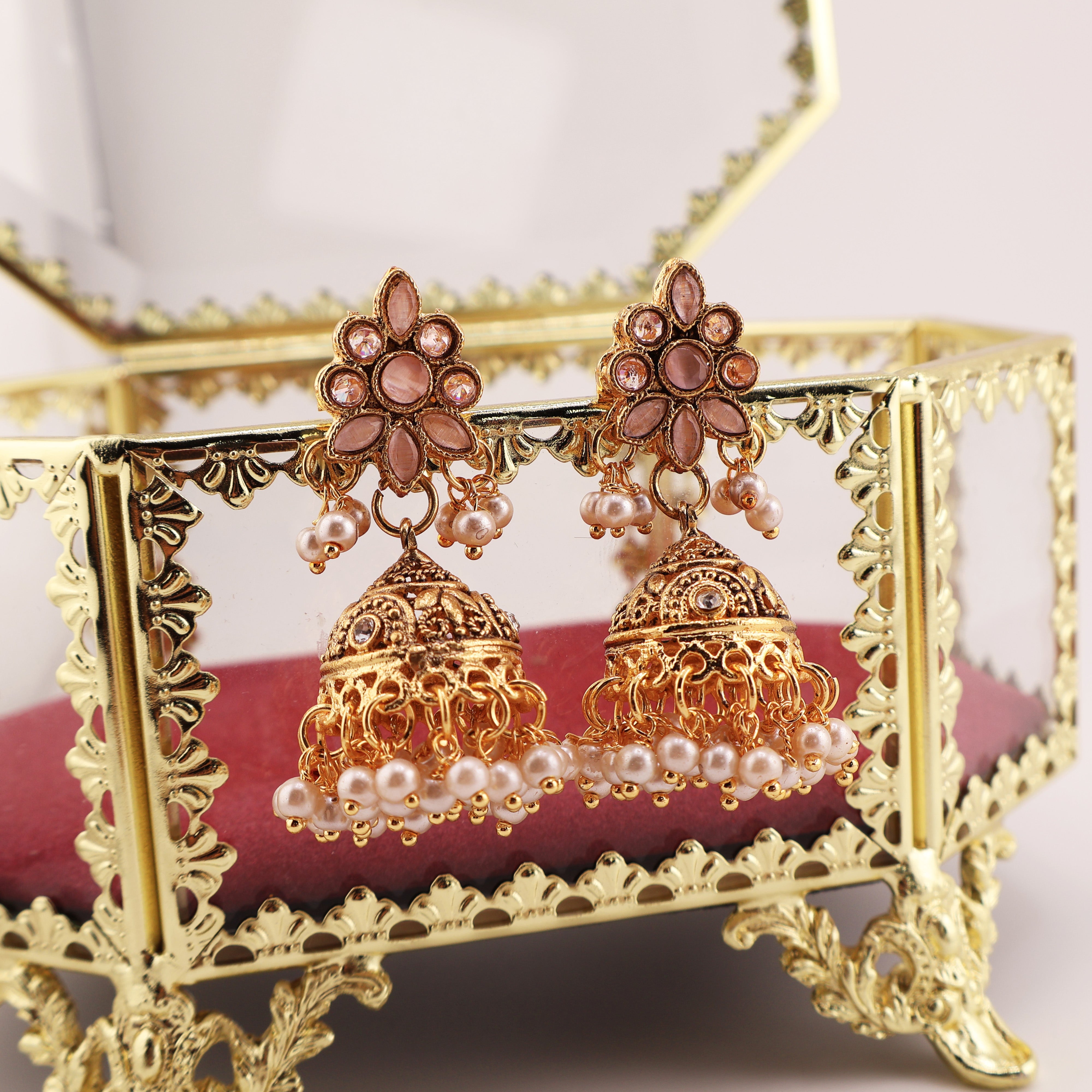
The earrings follow the necklace rather than competing with it. Jhumkas, the bell-shaped drops, are the classic match. Chandbalis, the wide crescent earrings, go grander. With a heavy choker, many people add an ear chain (a fine sahara that hooks from the earring to the hair) so the weight is carried by the head and not the lobe. The detail to check is simple: the earrings should echo the necklace's stones and framing, not introduce a new color or a different gold tone.
Why buy the set instead of the pieces
You can absolutely build a look from separates, and for everyday wear that is often smarter. For a wedding or a big festive night, the set wins for one practical reason: matching is hard. Getting a necklace, earrings and tikka to agree on stone color, gold finish and scale across three separate purchases is fiddly, and a near-miss is more obvious in photographs than people expect. A set takes that problem off the table. Everything was designed to belong together, so it photographs as one intentional look instead of a careful guess.

There is a cost angle too. A matched set is usually better value than buying each piece on its own, and it saves you the slow, frustrating hunt for an earring that pairs with a necklace you already love. If you are dressing for a full wedding season, owning one or two complete sets gives you a reliable formal look you can repeat without rethinking it every time.
Choosing a set that earns its keep
Start with the heaviest event you need it for, then check the framing. On kundan-style work, the gold border around each stone should be clean and even, the settings should sit flush, and the back should be finished rather than rough. That framing is the difference between a set that looks like heritage and one that looks like costume. After that, think about re-wear: a set bold enough for the main event but light enough for a sangeet or a friend's mehndi is the one you will actually use again. The Naila set is a good example of that balance, full enough to anchor a look without weighing the night down.
One last thing, because it protects your investment. Plated and kundan-style pieces want a little care that solid gold does not. Keep them away from perfume and water, wipe each piece after wear, and store them separately so the stones do not scratch. Treat a good set that way and it will look new across an entire wedding season, ready for the next function before you have even finished the current one.