
Gold-Plated vs Vermeil vs Antique Finish: What Lasts Longest
The short answer first. Among the finishes you actually meet while shopping for South Asian jewelry, gold vermeil outlasts standard gold plating, and antique finish is not a measure of lifespan at all. It is a look. The thing that decides how long any gold finish survives is its thickness, measured in microns, and almost no product page will tell you what that number is. So let us fix that. Here is what the three terms really mean, how long each one lasts, and how to make any of them go the distance.
The words get thrown around as if they were grades of the same thing. They are not. One is a manufacturing term with a legal definition, one has almost no definition at all, and one is a surface treatment that sits on top of either. Knowing which is which changes what you pay and what you walk away with.
What the three terms actually mean
Gold plating is a thin layer of gold bonded over a base metal, usually brass on a statement piece, using an electric current. There is no legal minimum thickness in most markets, which is the catch. A so-called flash plating can be a mere whisper of gold, under half a micron, applied for color and nothing else. Standard plating sits around 1 to 3 microns. Heavy plating runs from roughly 2.5 up to 5 microns. For scale, a single human hair is about 70 microns across, so even the thick end of plating is thinner than it sounds.
Gold vermeil is the one term here with a rulebook. To be sold as vermeil in the United States it must have a sterling silver base, gold of at least 10 karat, and a gold layer at least 2.5 microns thick. The sterling base is the quiet advantage. When the gold finally wears thin, what shows through is pale silver rather than the yellow-brown of brass, so the aging is far less obvious.

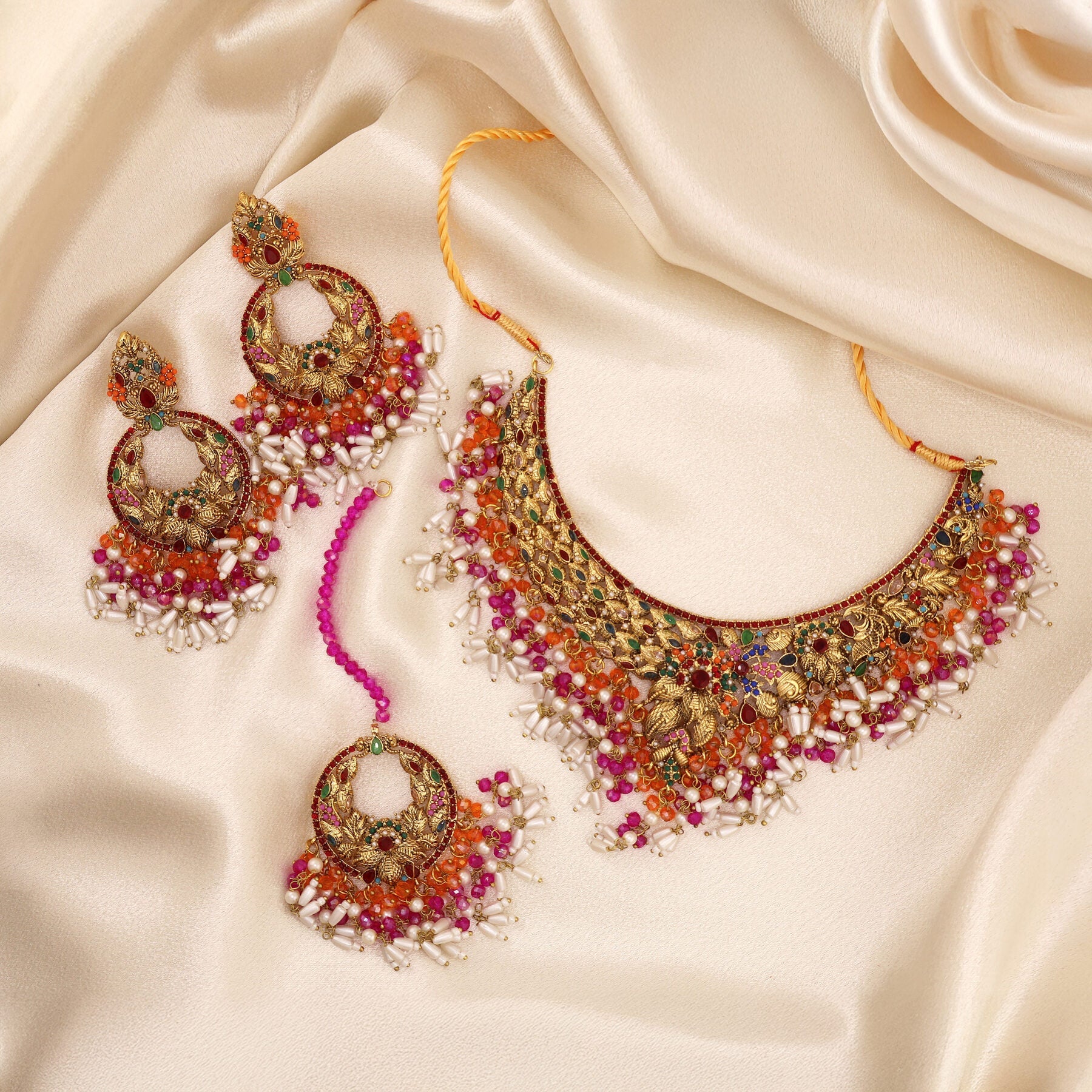
Antique finish is the odd one out, because it says nothing about how much gold is on the piece. It is a treatment. The jeweler oxidizes or tints the surface so the metal reads aged and matte, darker in the grooves and softly worn on the high points, the way an old heirloom looks after decades in a velvet box. It is a styling decision laid over plating, not a thickness. And it carries a sneaky practical benefit, which I will come back to.
So which one actually lasts longest
Order them by the only thing that matters, the gold layer, and the ranking is simple. Flash-plated pieces are measured in months. Expect six months to a year before the color starts rubbing at the edges where your skin and clothing catch it most. Standard plating, the 1 to 3 micron band, will give you a year or two of regular wear. Heavy plating and true vermeil, anything from 2.5 microns up, hold their finish for two to five years, sometimes longer if you are gentle with them.
Those are estimates for jewelry in steady rotation, though, and most South Asian sets are not. An occasion set worn a handful of nights a year ages on a completely different clock. A well-plated bridal suite you bring out for weddings and Eid can look new for a decade precisely because it spends most of its life resting, not rubbing. Wear frequency, not just microns, writes the timeline.
Antique finish sits outside the ranking. It lasts exactly as long as the plating underneath it, but it ages more kindly. Because the look is already uneven and lived-in by design, the small scuffs that would scream on bright mirror gold simply blend in. A bright gold piece announces every scratch. An antique one quietly absorbs them.
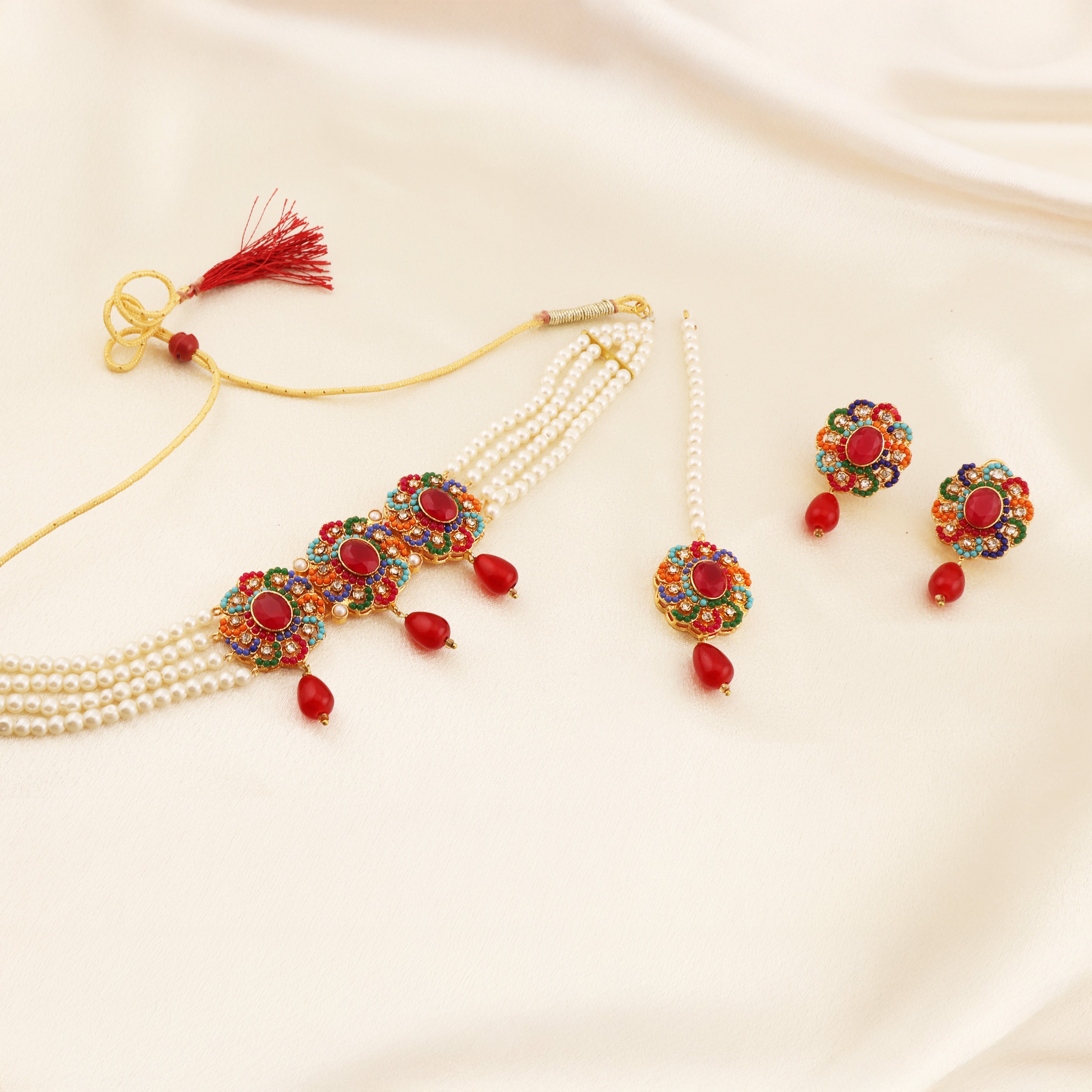
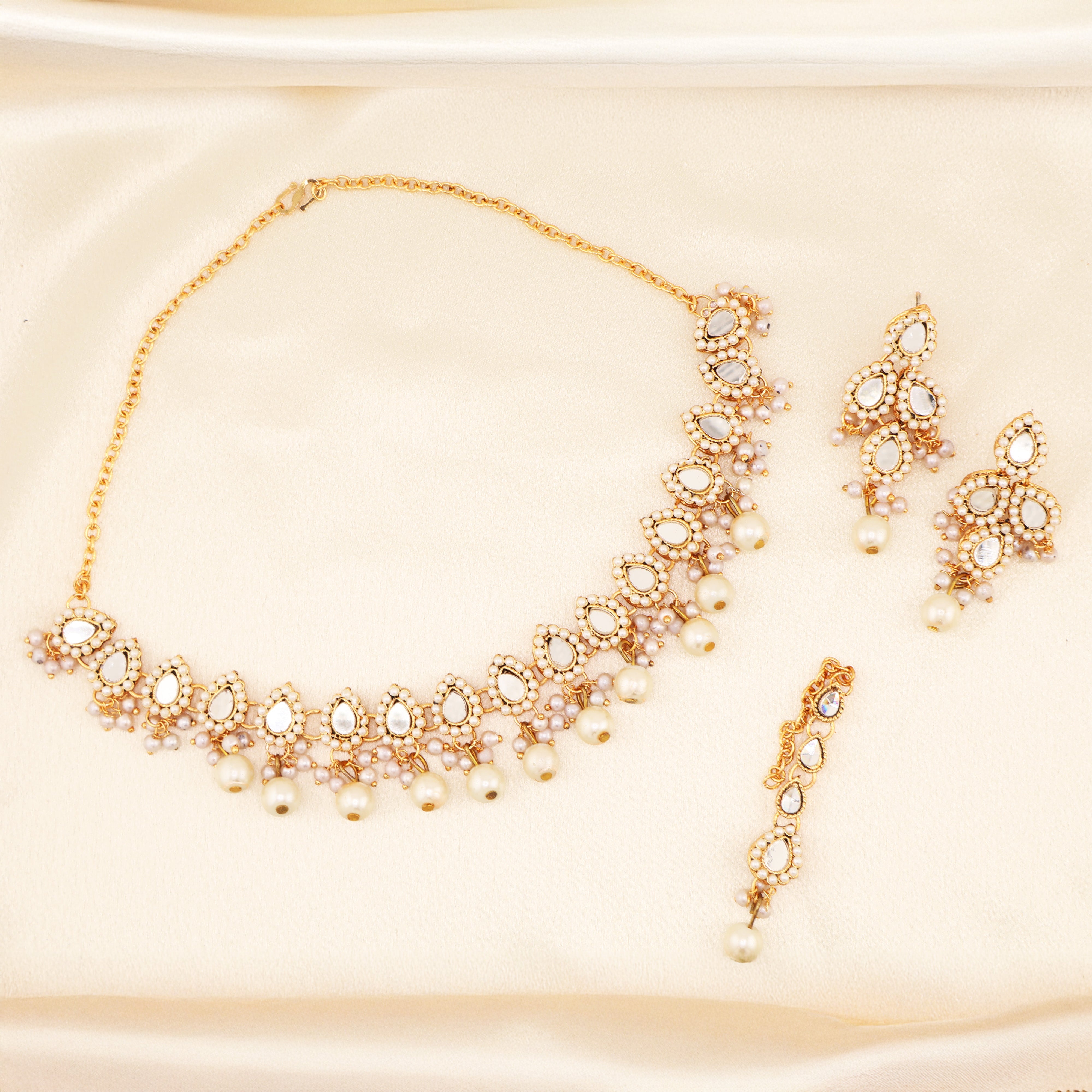
One thing worth saying plainly about heavier South Asian jewelry. The big statement chokers, rani haars and full bridal sets are almost always gold-plated over brass rather than vermeil, because a sterling silver base is impractical at that weight and scale. Vermeil tends to live in lighter, single pieces. So when you are choosing a full kundan-style set, the useful question is not whether it is vermeil. It is how thick the plating is and how well it has been finished.
How to judge a finish before you hand over money
Start by simply asking for the micron count. A seller who plates properly will know it and tell you. Vagueness is its own answer. Beyond that, let your hands do some of the work. A piece with real weight usually carries more metal and a more careful plating bath behind it, while something suspiciously light and tinny rarely had much gold to spare.
Then look closely, and look at the back. The color should be even and consistent across the front, into every recess, and around the reverse of each setting. Patchy or pale gold hiding in the crevices is the classic flash-plating tell, because thin baths cover the easy surfaces and skimp on the rest. On an antique piece, check that the darkened tint looks deliberate and even rather than muddy or smeared. A good antique finish has rhythm to it. A bad one just looks dirty.

How to make any finish go further
The three things that strip a gold finish are friction, moisture and chemistry, roughly in that order, and all three are easy to manage once you know them. The single best habit costs nothing: make your jewelry the last thing you put on and the first thing you take off. Perfume, hairspray, lotion and setting powder are all mildly corrosive to plating, so let them dry and settle before anything gold touches your skin.
Moisture is more forgiving than people fear, with two exceptions. Sweat and chlorine are genuinely hard on a finish, far harder than a splash of clean water, so the gym, the pool and a hot shower are all reasons to take a piece off rather than chance it. Friction is the quiet killer in storage. Pieces jumbled together in one box rub each other's high points bare long before normal wear would. Give each set its own soft pouch, keep them apart, and tuck an anti-tarnish strip in alongside antique and silver-based finishes, which are the ones most prone to dulling in open air.
And if a finish does eventually thin, that is not the end of the piece. A well-made set can be re-plated, dipped again to bring the gold back, which is worth knowing before you retire a faded favorite to a drawer. The structure underneath is usually sound. It is only the surface that tires.
The finish that lasts longest, in the end, is the one matched to how you actually wear it. If you want a piece in weekly rotation, pay for thickness and treat microns as the headline number. If you are buying a set for the big nights, even standard plating, looked after, will outlast the trend that made you want it. You can see how a well-finished set holds together across the gold-plated full sets and the wider bridal jewelry edit, and the Nina set is a good example of an even, all-over finish built to be brought out season after season.