
The Rani Haar Returns: 2026's Long Necklace Trend
The rani haar is back, and it has stopped being the piece you add once the choker is sorted. This wedding season the long necklace is leading bridal looks again, dropping past the collarbone to the chest, worn either as a single grand statement or stacked beneath a close choker for coverage from throat to sternum. After years of the high, tight choker running everything, the longest necklace in the box is the one brides keep reaching for.
If your mother or grandmother had one heavy necklace she called the rani haar, you already know the shape. What has changed is its status. Here is where it comes from, why it is back, and how to actually wear one now.
A necklace with royal roots
Rani haar means, roughly, queen's necklace, and the name is not just flourish. The style traces to the courts of Indian royalty, where queens and noblewomen wore long, layered necklaces as a plain marker of rank and prosperity. The Nizams of Hyderabad and the Rajput courts were known for them in particular, often strung in pearls rather than colored stones. The Hyderabadi satlada, a seven-strand pearl necklace, is the most celebrated descendant of that line, and jewelers in the city have been making the form for the better part of four hundred years.
That lineage is the whole appeal. A rani haar carries an old, courtly weight a short necklace cannot fake, which is exactly why it reads as bridal the second it goes on.

Why it is back now
The revival comes down to what brides are wearing underneath the jewelry. Deep necklines on lehenga blouses and sarees have taken over the season, and an open neck leaves a long stretch of skin a choker alone can never fill. A rani haar drops straight into that space. It follows the neckline instead of competing with it, and it lends the chest the same sense of occasion the choker gives the throat.
There is a camera reason too. Bridal portraits are shot close and full length, and a long necklace gives the lens something to travel down rather than stopping the whole look at the collarbone. Under heavy mandap lighting, that falling line of stones or pearls is what makes an outfit read finished instead of half-dressed.
Solo, or layered: two ways to wear it
The easiest way to wear a rani haar in 2026 is on its own. One long necklace, a clean neck above it, and a strong pair of earrings holding the face. This is the move for a sangeet, a reception, or any night you want presence without a full bridal suite pressing down on you. Let the haar be the loudest thing in the look and keep everything else quiet.
The grander option is to layer. A close choker sits at the base of the throat, the rani haar falls below it, and the gap between them is the whole point: it shows skin, separates the two pieces, and fills the neckline the way a heavy bridal portrait demands. The one rule that matters is contrast in density. If the choker is solid and structured, keep the haar more open and linear, or flip it. Two equally heavy pieces stacked together just crowd each other. One should lead, one should follow.

Pearls, kundan, or color
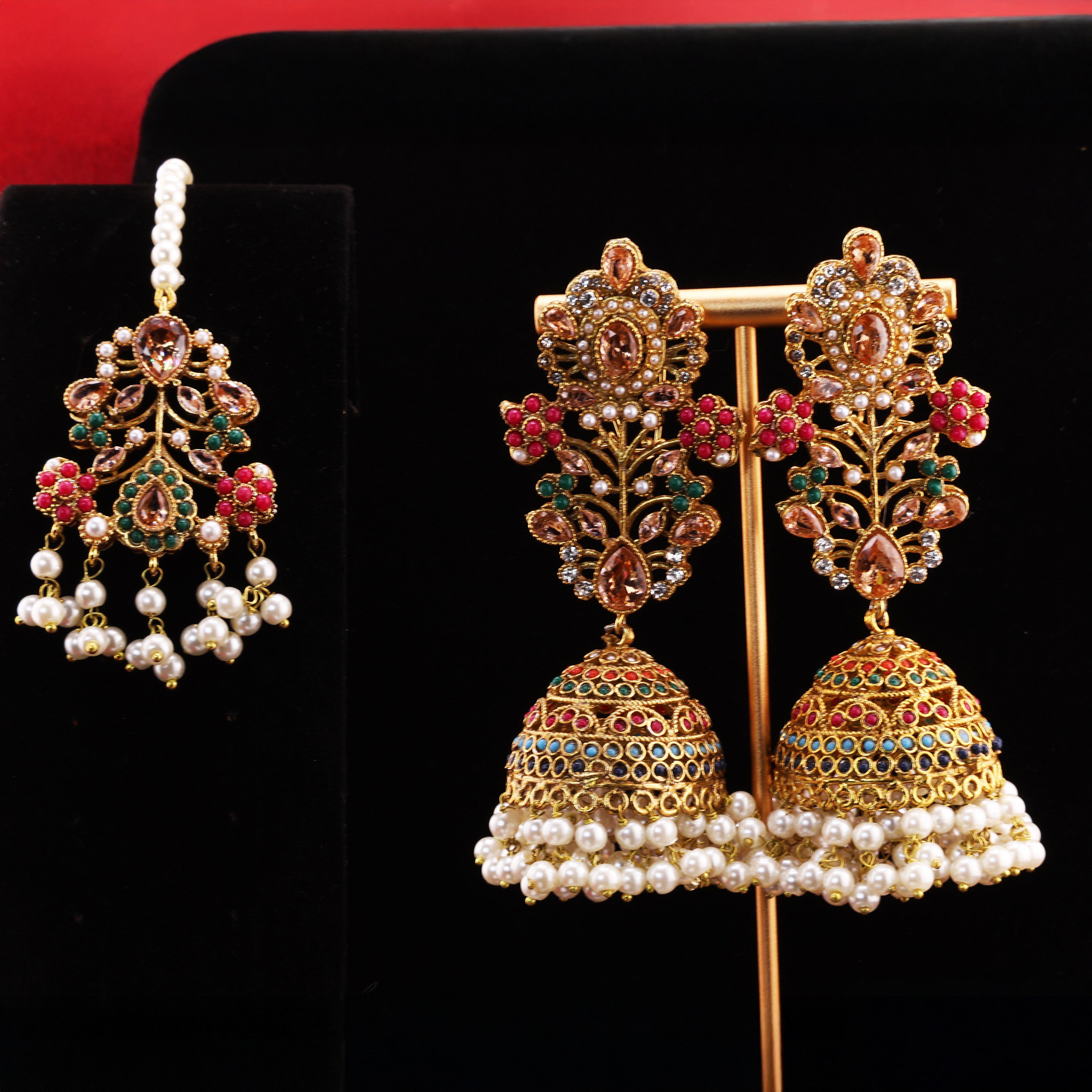
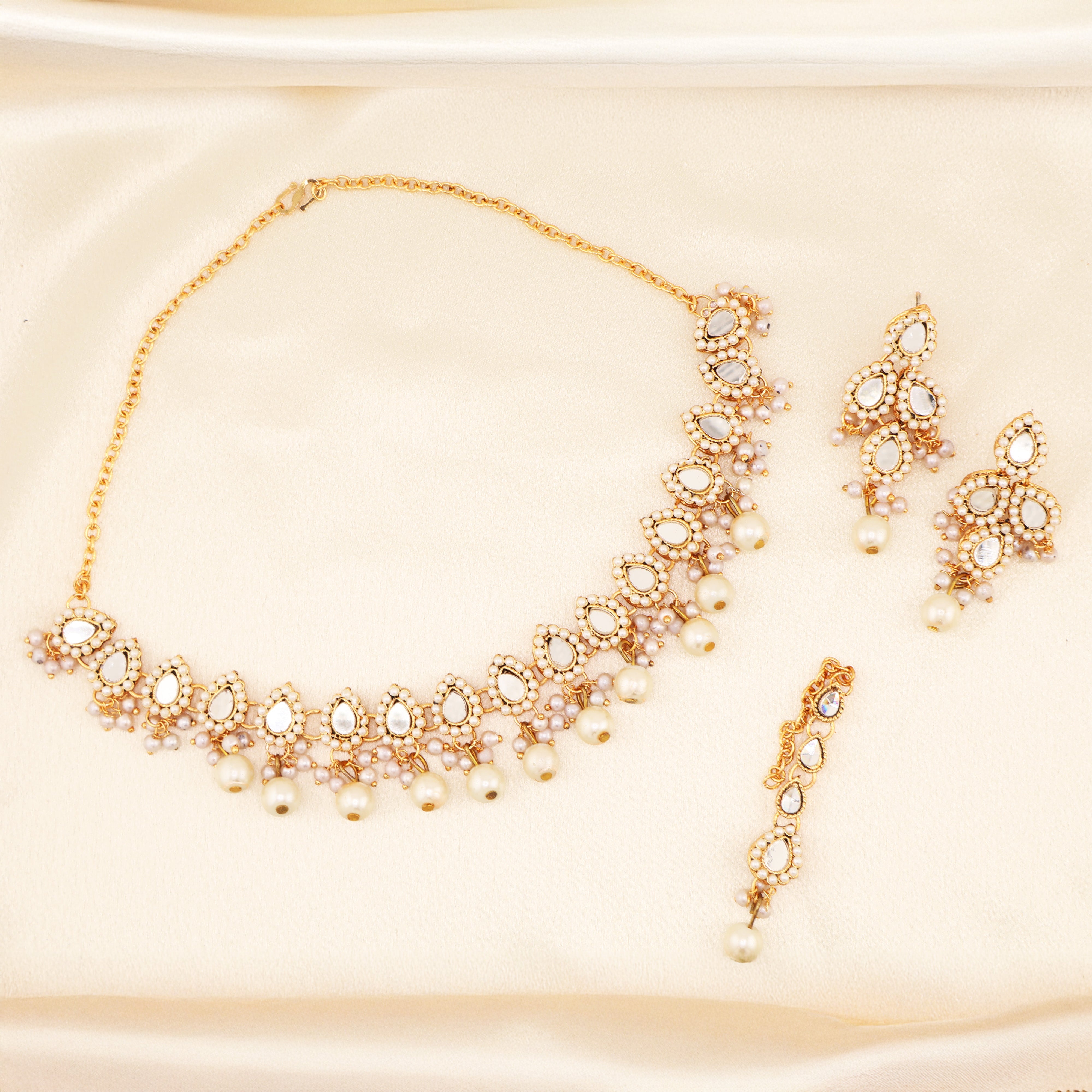
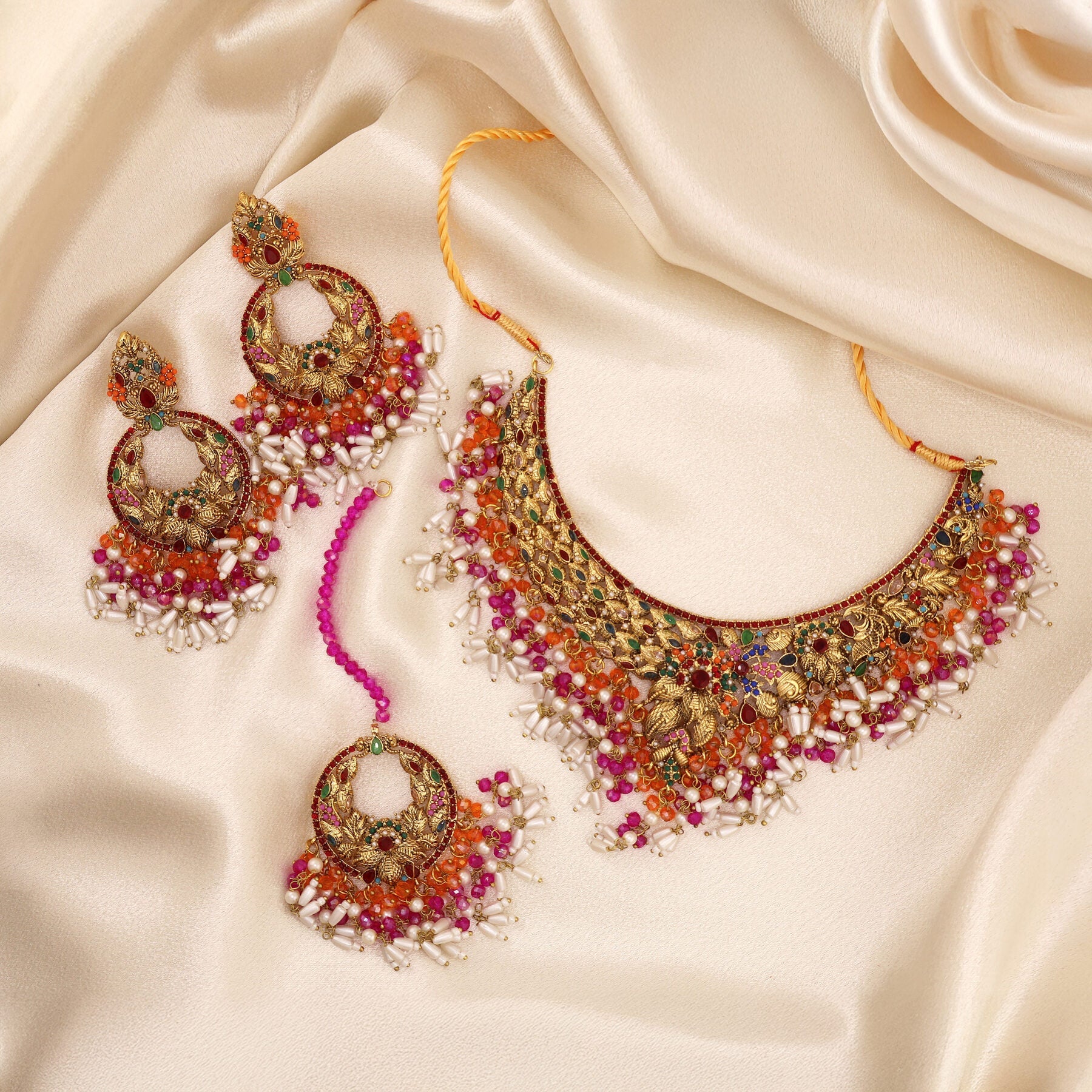
The finish sets the mood entirely. Pearl rani haars, the Hyderabadi tradition, read soft and aristocratic and flatter almost any outfit, which is why they have outlived every passing trend. Kundan-style haars, with bright gold framing worked around each stone, carry more of the classic Pakistani and North Indian bridal feeling. A haar threaded with colored stones, deep green or ruby, is the boldest of the three, the version that turns the necklace into the center of the entire look.
Whatever the finish, judge a long necklace by how it is built. Check that the strands hang evenly and do not twist, that each stone is framed cleanly, and that the clasp feels genuinely secure, because a piece this length swings when you walk and dance. You can see how the proportions sit in our chokers and full sets collection, and the Rani set is a natural starting point if the long, regal silhouette is what you are after.

Getting the look without a designer budget
A solid-stone heirloom rani haar runs into serious money, but the silhouette itself does not have to. A well-made kundan-style haar gives you the same drop, the same regal line, the same effect in photographs for a small slice of the cost. Start with one long necklace you love, decide whether you are wearing it solo or under a choker, then build the rest of the look down from there. Browse the bridal collection for pieces cut to anchor a full wedding look, or the Nina set for a lighter long necklace you will actually re-wear once the season is over.
The choker had its years at the top. This season, the necklace that falls to your chest is the one worth investing in.