
Article: Layered Bridal Necklaces: 2026's Stacked Kundan Look
Layered Bridal Necklaces: 2026's Stacked Kundan Look
One necklace is no longer the plan. The 2026 bride is stacking. A choker sits high on the throat, a mid-length piece fills the space beneath it, and a rani haar drops toward the waist, all worn together. Layered bridal necklaces have gone from a stylist's experiment to the request we hear first, and the reason is simple. A single strand, however lovely, leaves a lot of bare silk on a heavily worked lehenga. Three pieces, chosen with care, turn the neckline into the loudest part of the outfit.
This is not the indiscriminate piling of a decade ago. The current version is edited. Brides are layering with intention, picking pieces that talk to each other rather than fight, and the result reads as abundance with a plan.
What is driving the stack
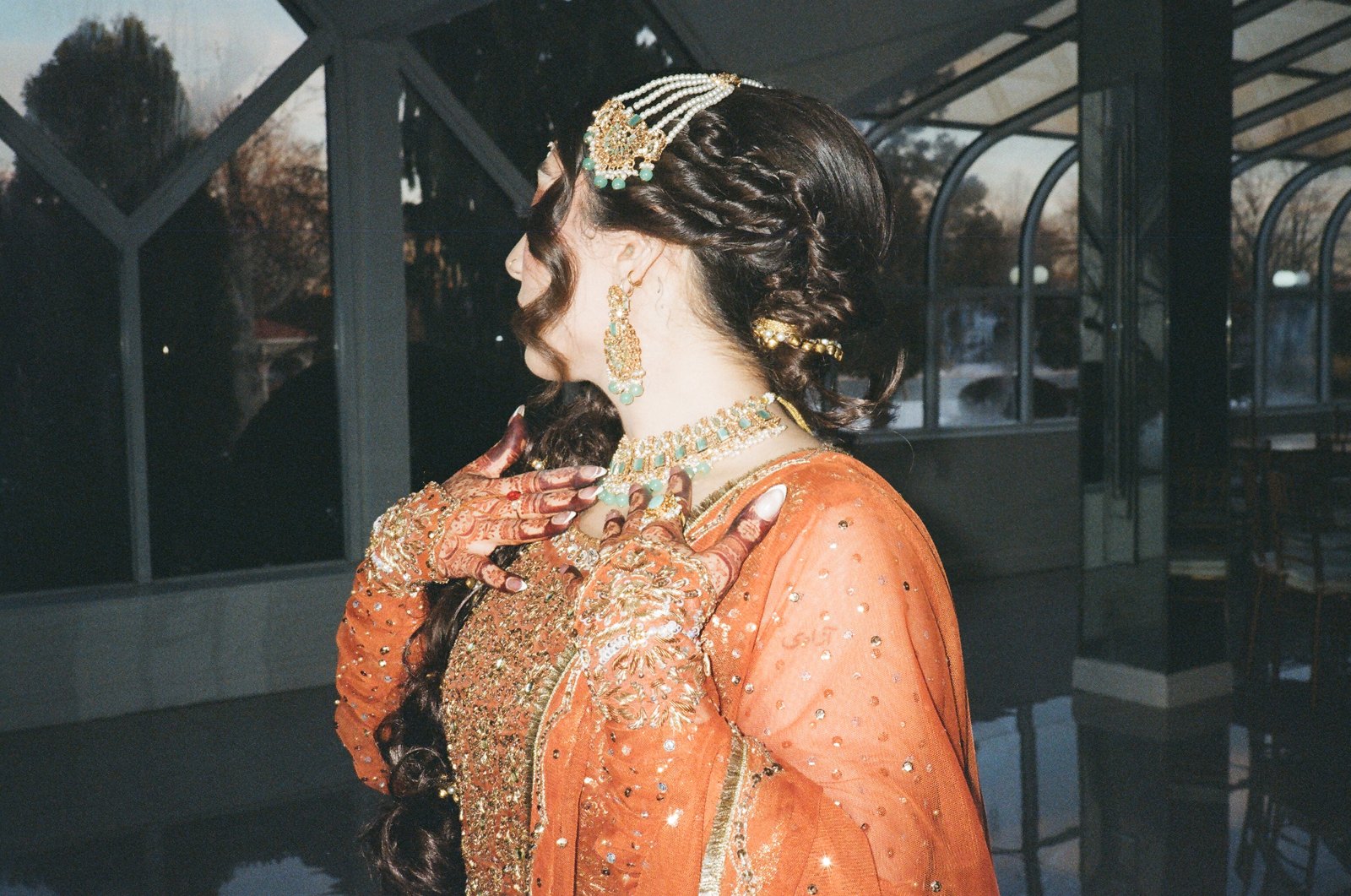
Maximalism never really left South Asian weddings, but it has grown up. The single heavy haar that swallowed the chest has given way to a considered set of layers, each doing a specific job. Sajal Aly's recent bridal post is a useful reference for how this reads in motion: a deep red lehenga, a kundan choker high on the neck, longer strands cascading below, and a maang tikka tying the face into the whole. The jewelry runs green-toned against the red, which is exactly the kind of contrast that stops a layered look from collapsing into a single gold blur.
View this post on Instagram
Sajal Aly in a layered kundan bridal set with choker, rani haar and maang tikka, via @sajalaly on Instagram. Shared for reference and inspiration.

Notice what the look is not. It is not three identical necklaces fighting for the same inch of neck. It is a tight piece, a fuller piece, and a long piece, spaced so each one stays legible on its own.
The three-layer formula
Most brides who carry the trend well stop at two or three layers. Start with a choker worn close to the throat. Add a mid-length necklace that sits an inch or two beneath it. Finish with a rani haar long enough to fall clear of the others, often grazing the sternum or lower. Spacing matters more than the count. If the pieces touch, the eye reads one crowded mass instead of three deliberate lines.
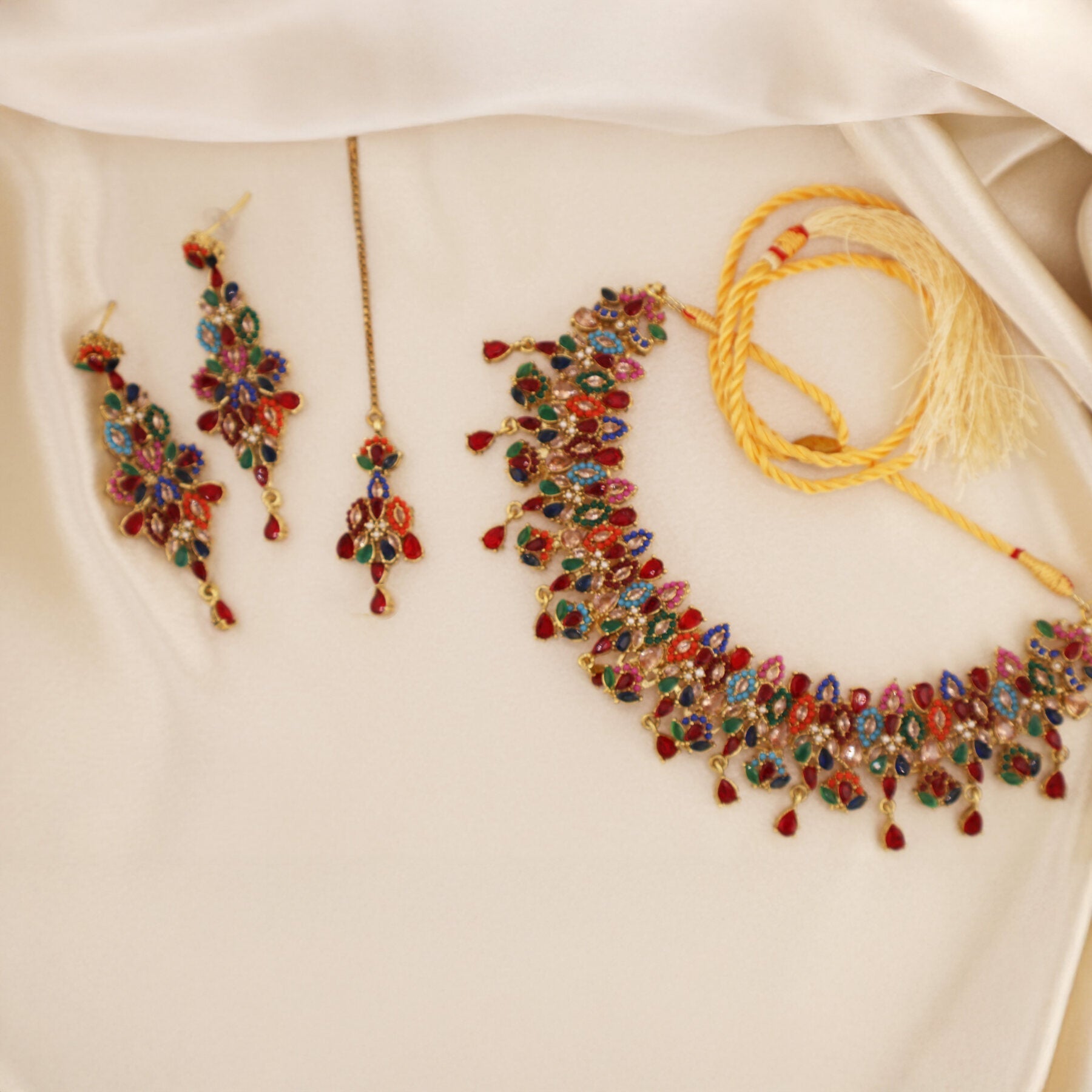
There is a weight rule worth following too. Let one piece be the hero and keep the other two quieter. If your choker is dense with stones, your rani haar can be a simpler chain with a single pendant. Three heavy pieces at once is the quickest way to look costumed rather than considered. ZARIAH's layered kundan chokers are built to be that anchor. A statement set like RANI holds the top of the stack, leaving the longer pieces to hang beneath without competing for attention.
Keep the stones speaking the same language
The fastest fix for a messy stack is color discipline. Pick a stone story and hold it across all three pieces. If your choker is set with uncut white stones, your rani haar should not suddenly introduce ruby and emerald. Warm outfits in red and maroon sit beautifully with gold and antique-toned settings, while cooler shades like ivory, blush and powder blue are flattered by white kundan, pearls and clear stones. Match the metal tone as well. A gold choker over a silver-toned haar looks like an accident, not a decision.

This is also where your maang tikka earns its place. A tikka picks up the same stones as the necklaces and pulls the whole stack upward toward the face, which is where you want the eye on your wedding day. Earrings should echo that story, not introduce a fourth idea.
Where the layered look falls apart
The most common mistake is forgetting the neckline. A high, closed kameez can take a choker and very little else, while a deep sweetheart cut is begging for the full cascade. Match the stack to the blouse before you fall for a combination that physically will not sit right. The second mistake is weight. Three substantial pieces pull on the neck for hours, and a bride who spends her reception adjusting her jewelry is not enjoying it. Try the full set on together, sit down, turn your head, and check it behaves before the day itself.
The last thing to watch is proportion against your own frame. A petite bride can be swallowed by a rani haar that reaches the navel, and a tall bride can make a short choker-only look feel sparse. Layering is personal arithmetic, not a fixed recipe.
Worn with restraint, the stacked look does something a single necklace cannot. It frames the face, fills the outfit, and gives the photographs depth from collarbone to waist. If you are assembling a set for your own functions, start with one anchor piece you love and layer outward from there. Our bridal sets are designed to be combined this way, so the choker, the haar and the tikka feel like one family rather than three strangers introduced on the morning of the wedding.