
Jewelry for a Saree, Lehenga or Gharara: A Guide
The fastest way to choose jewelry for a South Asian outfit is to look at the outfit first, not the jewelry box. A saree, a lehenga and a gharara each frame your neck, shoulders and face in a completely different way, so a set that looks made for one can quietly fight with the next. Before you reach for your favorite choker, read the neckline and read the drape. Between them they decide almost everything.
Read the neckline before you reach for a set
Two questions settle most of it. How high does the neckline sit, and how does the fabric fall around it? A high, closed neckline wants something short that finishes above it, a choker or a collar, because a long chain simply vanishes under cloth. An open or deeper neckline leaves bare skin, and that space is exactly where a rani haar or a layered necklace earns its keep. Get that relationship right and the rest of the look falls into place. Get it wrong and even a beautiful piece looks borrowed from someone else's outfit.
The same thinking runs up to your ears and forehead. The more your neck is covered, the harder your earrings and tikka have to work, because they become the only jewelry anyone can read from across a room.
With a saree
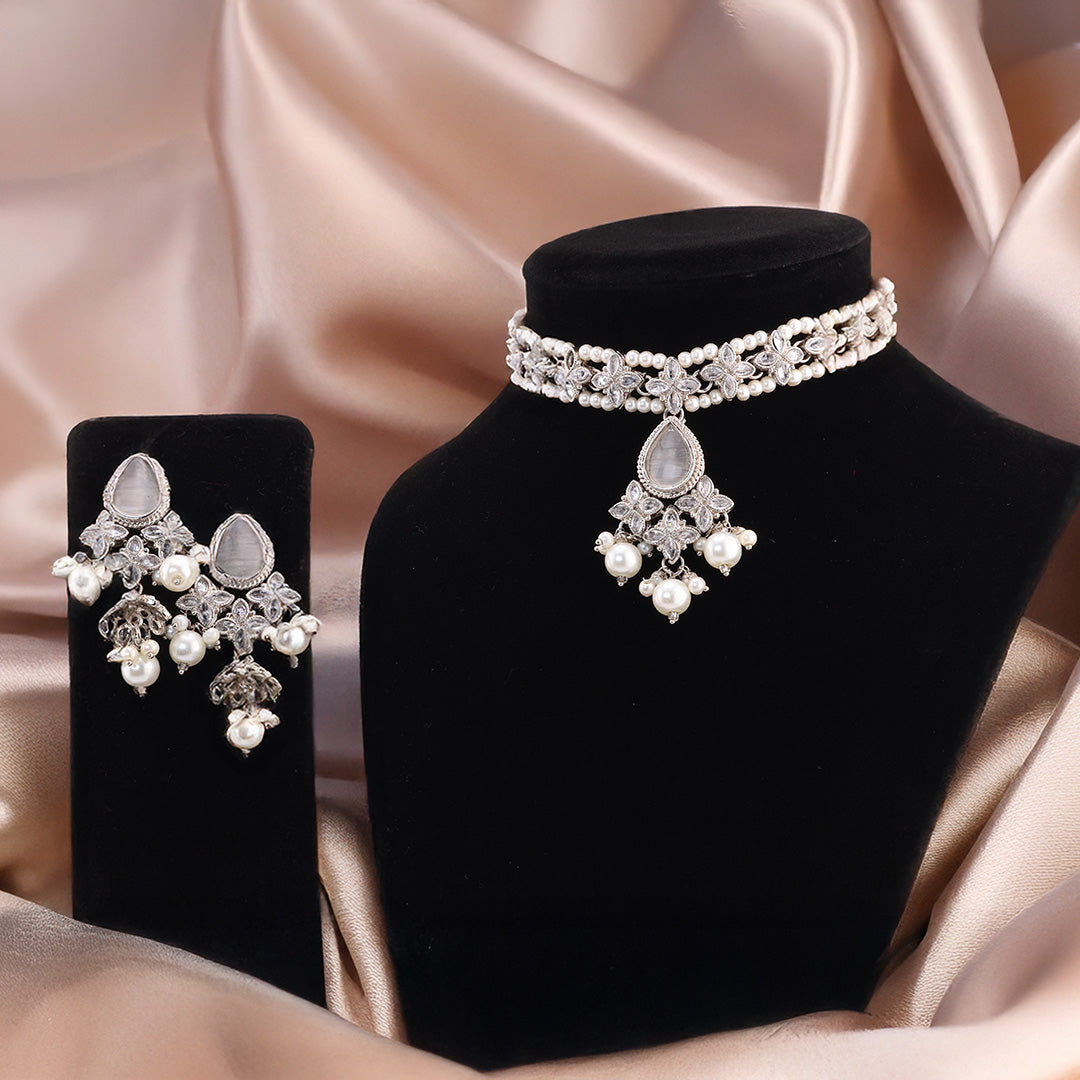
A saree is built around asymmetry. The pallu falls over one shoulder, the blouse sets the neckline, and one arm and your midriff are usually left bare. That openness is an invitation. If your blouse dips into a low or sweetheart neckline, this is the moment for length. A long haar, a rani haar layered over a shorter necklace, or one dramatic collar dropped into the open space. A dramatic collar like the RANI set is built for precisely this kind of room to breathe.
High-neck and boat-neck blouses turn the rule on its head. They close off the chest, so leave the long chain in the box and let a snug choker or a pair of bold jhumkas carry the look instead. Because one wrist sits bare beneath the pallu, a saree is also the easiest outfit to load with stacked bangles or a single wide cuff. Keep the other wrist quieter so the eye is not pulled in two directions at once.
With a lehenga
A lehenga can carry more than almost anything else you own. The sheer volume of the skirt and the structure of the choli give heavy jewelry a stage to stand on, which is why full bridal suites belong here. The choli neckline still leads the way. A deep or scooped choli takes a layered look beautifully, a choker stacked over a longer necklace, the two lengths doing separate jobs. A higher choli is happiest with a single confident choker and nothing crowding it from below.

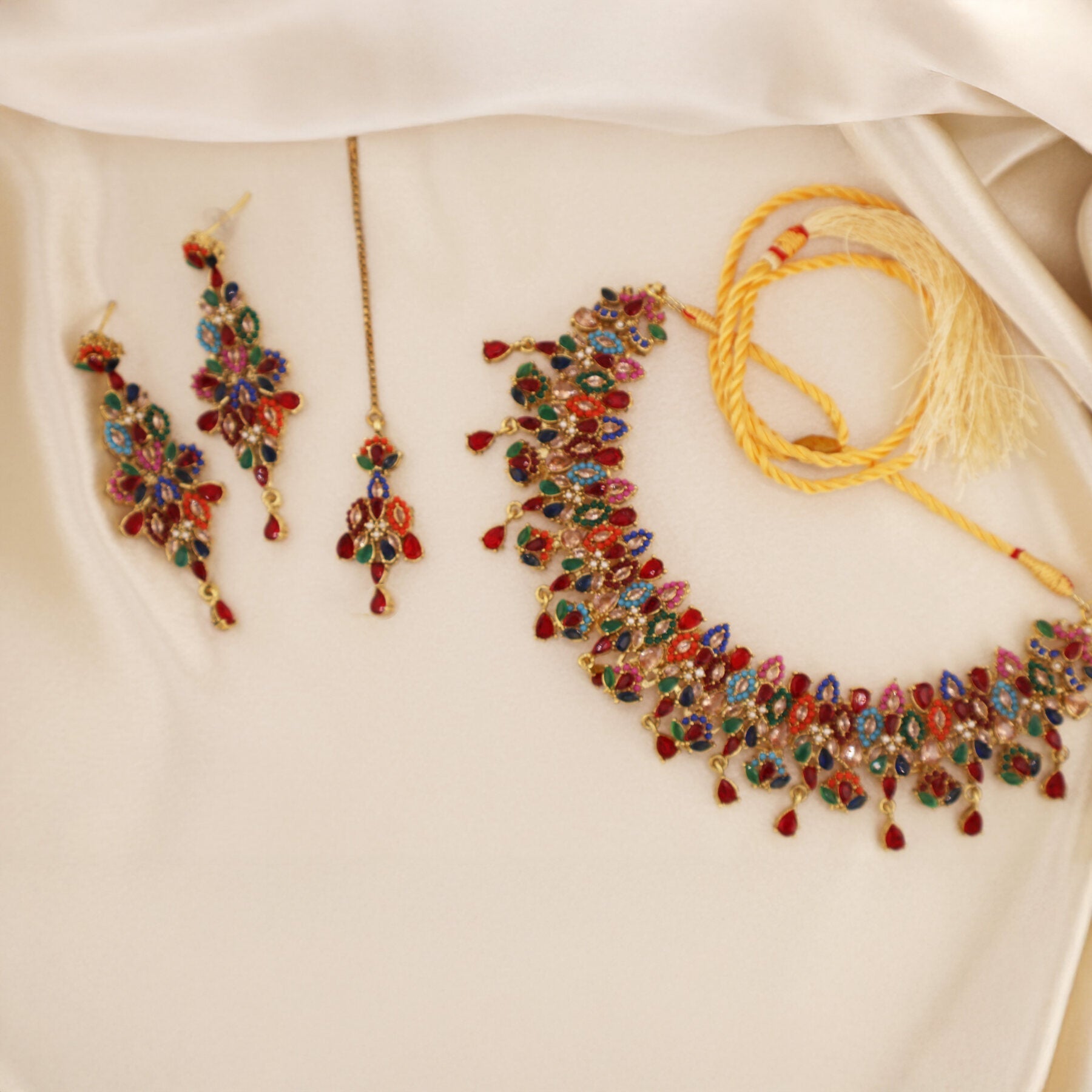
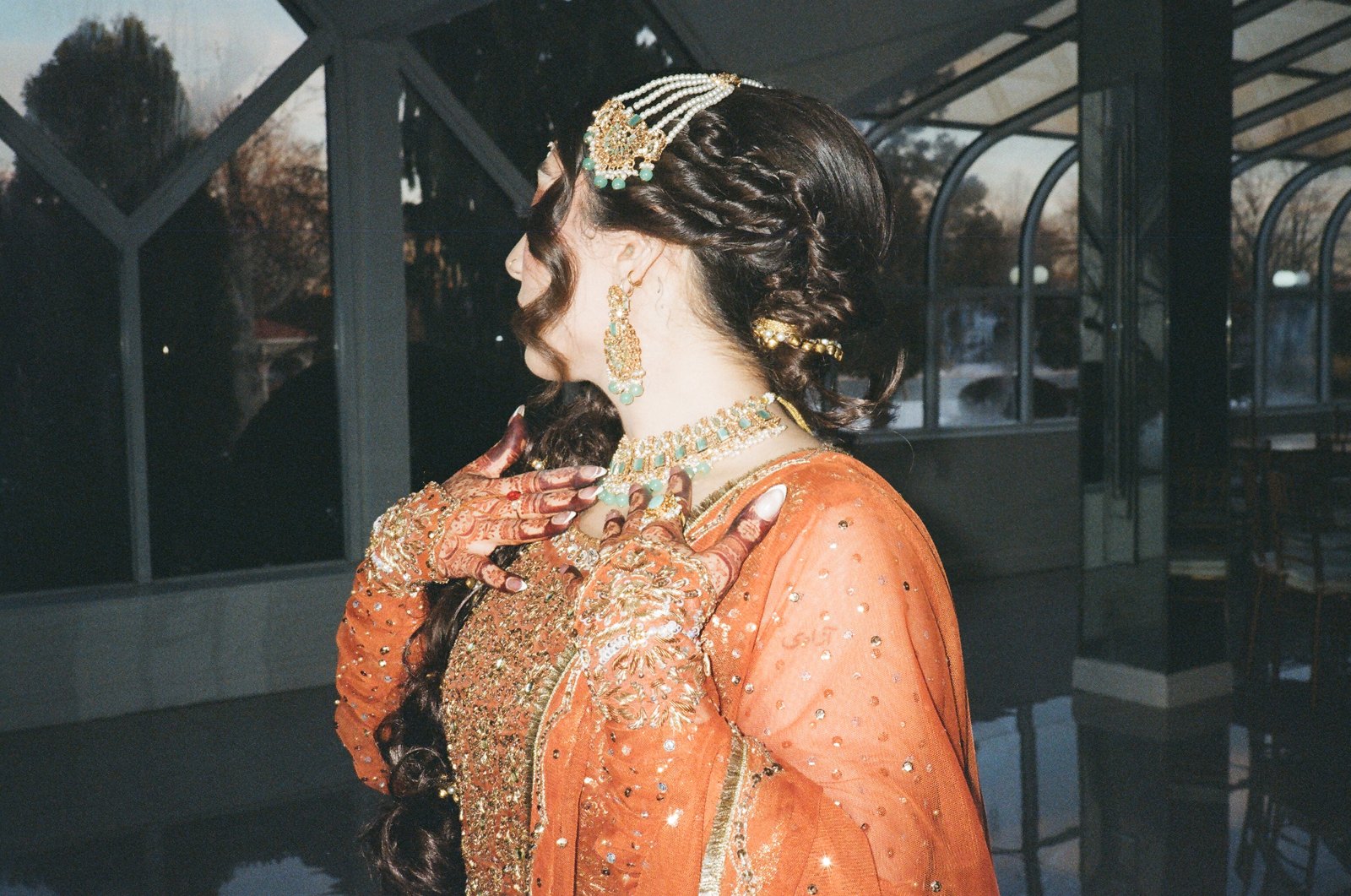
Then there is the dupatta. Draped over the head or pinned at one shoulder, it frames the face and pulls every glance upward, which makes the lehenga the natural home for a maang tikka or a matha patti. If the dupatta covers your ears, size the earrings up or choose a jhoomar that sits forward of the fabric. You can build the whole thing from the chokers and full sets and then balance it against the neckline you actually have, not the one you wish you had.
With a gharara, sharara or peshwas
This is where Pakistani formalwear does its own thing. A gharara pairs a short kameez or kurti with those dramatic flared, ruched legs, and the top usually sits higher and more covered than a choli. The drama is happening below the waist, not at the chest. So the jewelry climbs. Let the ears and the face take the lead, with statement chandbalis or jhumkas, a maang tikka, or a jhoomar pinned to one side. A neat choker works when the neckline allows it, but a long necklace tends to get swallowed against a fuller, busier top.
The same holds for a peshwas, that long flowing frock silhouette so many brides are choosing for their nikah now. Because the outfit is already doing so much, the smartest move is restraint at the neck and generosity at the ears. A pair of well-chosen statement earrings and a tikka will read clear across a hall, where a heavy collar would only crowd the kameez.
Make one set stretch across all three
You really do not need a separate suite for every outfit. A well-made set comes apart and goes back together, and that is the quiet trick to getting more nights out of it. Wear the choker on its own with a high gharara kameez. Add the longer haar when an open saree blouse leaves room for it. Drop the necklace altogether on a busy lehenga and let the tikka and earrings do the talking. The pieces stay the same. What changes is how many you wear at once, and where you let them sit.
Match the tone to the cloth
The last call the outfit makes for you is the metal tone. Warm yellow gold flatters reds, maroons, deep greens and most traditional palettes, which is half the reason it dominates desi jewelry in the first place. A cooler antique or silver-toned finish often looks sharper against pastels, ice blues, black and the softer modern colors coming through this season. Hold the piece against the actual fabric in daylight before you decide. Stones read differently under the warm light of a wedding hall than they do on a phone screen, and the pairing that sings in person is the only one that counts.
So pull the outfit out of the wardrobe first. Drape it, see where it opens and where it closes, then choose the jewelry that answers it. That order, outfit and then jewelry, is the whole secret to looking properly put together rather than merely decorated.